
Legal Issue(s): Free Religious Exercise, Free Speech
Court: U.S. Supreme Court
Case Status: Success
Center's Role: Amicus
Case Description
Faith-based counselors nationwide help youth experiencing gender dysphoria by talking with children to address the underlying causes of their discomfort, alleviating their distress, and, if possible, helping them to accept their bodies without resorting to irreversible life-altering medical intervention. This approach is supported by scientific evidence and by recently enacted laws in dozens of states.
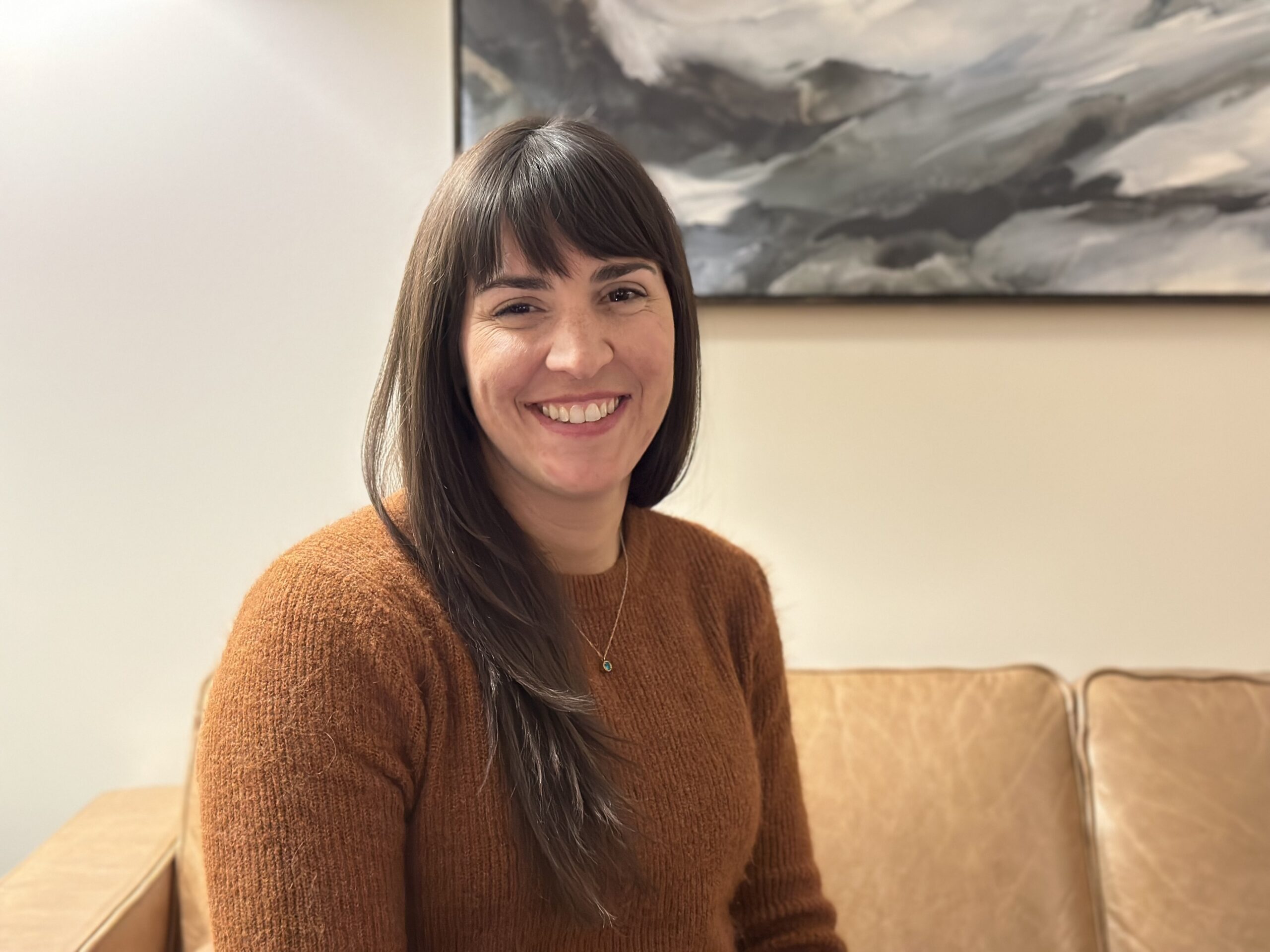
Kaley Chiles is licensed in Colorado as a professional counselor (LPC). She is a devout Christian whose view of human nature is informed by her Christian beliefs. She “believes that people flourish when they live consistently with God’s design, including their biological sex.”
Colorado, however, bans counselors from using this cautious approach. In 2019, the Colorado legislature passed a counseling restriction that outlines what counselors may and may not say to their minor clients. Colorado’s Minor Conversion Therapy Law (MCTL) prohibits licensed mental health professionals from engaging in conversion therapy, refers to practices aiming to change an individual’s sexual orientation or gender identity, with clients under 18. Specifically, the law bars Kaley and other counselors in Colorado from saying anything to clients under 18 that would encourage them to “change behaviors or gender expressions or to eliminate or reduce sexual or romantic attraction” toward members of the same sex.
Conversely, the law allows counselors to provide “[a]cceptance, support, and understanding” for clients who wish to “explore” their sexual orientation or gender identity, It also allows counselors to “assist” anyone who is “undergoing gender transition.” Rather than allowing children to work through the root causes of their discomfort, state law requires counselors to affirm children in their belief that they were born in the wrong body and only allows counseling that assists a child in undergoing a gender transition. In other words, Colorado allows counselors to discuss only the government’s view of sexual orientation and gender identity. As a result, therapists who offer compassionate talk therapy face the loss of their license and fines of up to $5,000.
Kaley filed a pre-enforcement challenge against the MCTL, seeking a preliminary injunction to prevent the MCTL’s enforcement, asserting violations of the Free Speech Clause and the Free Exercise Clause of the First Amendment. The U.S. District Court for the District of Colorado denied her motion, finding she failed to demonstrate a likelihood of success on the merits. The court concluded that the MCTL regulates professional conduct that incidentally involves speech.
Kaley appealed to the U.S. Court of Appeals for the Tenth Circuit, which also ruled against her, claiming that conversations in a counseling session constitute conduct, rather than speech. Judge Harris Hartz dissented, arguing that “courts must be particularly wary that in a contentious and evolving field, the government and its supporters would like to bypass the marketplace of ideas and declare victory for their preferred ideas by fiat.” In upholding the counseling ban, the Tenth Circuit deepened a split among appellate courts on the issue. The Eleventh and Third Circuits have concluded that counseling conversations are speech, while the Ninth and Tenth Circuits treat those conversations as conduct.
Following the Tenth Circuit’s decision, Kaley petitioned the U.S. Supreme Court for certiorari, arguing that the MCTL violates her First Amendment rights by censoring certain conversations between counselors and their clients based on the viewpoints expressed. She contended that governments do not have greater authority to regulate speech simply because the speaker is licensed or providing specialized advice. In March 2025, the Court agreed to hear the case.
On June 13, 2025, the Center filed an amicus brief with the Supreme Court on behalf of Kaley. The brief points out the Tenth Circuit’s critical error and the stakes. Talk therapy is pure speech, not conduct. The Colorado ban violates the First Amendment’s free speech protection for all Americans—including professionals—with its viewpoint discrimination. If allowed to stand, professionals nationwide will find themselves in danger of losing their licenses to practice when states that disfavor certain ideas start regulating them through professional standards. The brief points out that CLS has been fighting this battle for years against the ABA’s Model Rule 8.4(g) that exposes attorneys to discipline if they run afoul of the ABA’s preferred speech codes.
On March 31, 2026, the U.S. Supreme Court in an 8-1 decision struck down most applications of Colorado’s law that prohibits licensed counselors from engaging in conversion therapy for minors, defined as therapy that attempts to change an individual’s sexual orientation or gender identity. Justice Gorsuch, joined by all but Justice Jackson, wrote the majority opinion which says in part:
The State insists, and the Tenth Circuit agreed, that its law does not “regulate expression” at all, only “conduct,” “treatment,” or a “therapeutic modality.”. . . As a result, Colorado reasons, its law triggers no more than rational-basis or intermediate scrutiny review. . . . But the State’s premise is simply mistaken. In many applications, the State’s law banning “conversion therapy” may address conduct—such as aversive physical interventions. But here, Ms. Chiles seeks to engage only in speech, and as applied to her the law regulates what she may say. Her speech does not become conduct just because the State may call it that. Nor does her speech become conduct just because it can also be described as a “treatment,” a “therapeutic modality,” or anything else. The First Amendment is no word game. And the rights it protects cannot be renamed away or their protections nullified by “mere labels.”
In siding with Ms. Chiles, the Court agreed that the Denver-based Tenth Circuit Court of Appeals should have applied a stricter constitutional test to evaluate the law. The Court sent the case back to the appeals court to be reconsidered under the tougher test, which it is unlikely to pass.
The Court’s decision echoed many of the principles CLS advocated for in its amicus brief. Indeed, the Court’s reasoning closely tracked the arguments made in CLS’ brief, as summarized below.
Speech, Not Conduct
The first major argument of the CLS brief was that the MCTL law regulates speech, not conduct—that Colorado was attempting to redefine pure speech as “professional conduct” to evade the First Amendment. The Court adopted this reasoning squarely. Justice Gorsuch wrote that Ms. Chiles’s “speech does not become conduct just because the State may call it that” and that “the First Amendment is no word game” where rights “cannot be renamed away or their protections nullified by ‘mere labels.'”
Content-Based and Viewpoint-Based Discrimination
The CLS brief argued that the MCTL is both content based and viewpoint based because it prohibits speech aimed at changing sexual orientation or gender identity while explicitly exempting speech that affirms identity exploration or assists with gender transition. The Court agreed in full, holding that the law “goes a step further” than content regulation by “prescribing what views [Ms. Chiles] may and may not express.” The Court’s analysis of the statutory exemptions mirrors CLS’ own almost point for point.
Speaker-Based Discrimination
The CLS brief also argued that the MCTL is speaker-based discrimination because it singles out licensed professionals while leaving non-licensees free to engage in the same conversations. While the Court did not adopt a separate “speaker-based” analytical category, it reinforced the brief’s underlying point by holding that the fact Colorado’s regulation “targets only licensed healthcare professionals” “changes nothing” and that professional speech is not subject to “diminished constitutional protection”—citing NIFLA, which was central to CLS’ brief.
Strict Scrutiny and the Evidentiary Record
CLS’ brief urged the Court to apply strict scrutiny and cautioned that the psychology establishment’s conclusions about conversion therapy are not supported by rigorous research. The Court held that the law triggers far more demanding scrutiny than the rational-basis review the Tenth Circuit applied. The Court also echoed CLS’ concern about enforcing orthodoxy, writing that “a prevailing standard of care may reflect what most practitioners believe today, but it cannot mark the outer boundary of what they may say tomorrow.”
The Danger of Redefining Professional Speech
One of the most significant aspects of the CLS brief was Section III, where the brief drew the connection between the Colorado law and ABA Model Rule 8.4(g), warning that government penalization of professional speech has far-reaching implications beyond the counseling context. While the Court did not address ABA Model Rule 8.4(g) specifically, its holding reinforces the principles CLS advanced. The Court’s emphatic rejection of a lesser-protected “professional speech” category and its warning that “history is littered with examples” of governments manipulating professional speech to “suppress minorities” and censor “unpopular ideas” provides a strong foundation for future challenges to speech-restrictive professional regulations—including 8.4(g) and its state equivalents.